
Recent results
- W
- L
- L
- W
- W
- L




Roster
| No. | Player | Pos | Age | Ht | Wt | Exp |
|---|---|---|---|---|---|---|
| 2 |  Noa Essengue |
F | 19 | 6' 11" | 206 lbs | 2 |
| 3 |  Josh Giddey |
G | 24 | 6' 7" | 216 lbs | 6 |
| 5 |  Dailyn Swain Day-To-Day |
G | 21 | 6' 7" | 211 lbs | R |
| 7 |  Buddy Hield |
G | 33 | 6' 4" | 220 lbs | 11 |
| 8 |  Caleb Wilson |
F | 20 | 6' 9" | 211 lbs | R |
| 9 |  Nic Claxton Out |
C | 27 | 6' 11" | 215 lbs | 8 |
| 11 |  Leonard Miller |
F | 22 | 6' 10" | 220 lbs | 4 |
| 12 |  Zach Collins |
F | 28 | 6' 9" | 250 lbs | 10 |
| 14 |  Matas Buzelis |
F | 22 | 6' 8" | 209 lbs | 3 |
| 15 |  Jordan Hawkins Day-To-Day |
G | 24 | 6' 5" | 190 lbs | 4 |
| 19 |  Tobe Awaka |
F | 22 | 6' 8" | 255 lbs | R |
| 22 |  Jaylin Sellers |
G | 23 | 6' 5" | 205 lbs | R |
| 24 |  Norman Powell |
G | 33 | 6' 4" | 215 lbs | 12 |
| 25 |  Jalen Smith |
F | 26 | 6' 8" | 215 lbs | 7 |
| 30 |  Tre Jones |
G | 26 | 6' 1" | 185 lbs | 7 |
| 35 |  Isaac Okoro |
F | 25 | 6' 4" | 225 lbs | 7 |
| 44 |  Patrick Williams |
F | 25 | 6' 6" | 215 lbs | 7 |
Upcoming games

Injuries
-
Dailyn Swain Bulls · Illness
Day-To-Day -
Jordan Hawkins Bulls · Illness
Day-To-Day -
Nic Claxton Bulls · Hamstring
Out
About the Chicago Bulls
The Chicago Bulls are one of the NBA’s most recognizable franchises, shaped by championship standards, iconic players, and a proud place in the basketball identity of Chicago. Based in the Eastern Conference and playing home games at the United Center, the Bulls enter each season with national attention that comes from both their history and the expectations of one of the league’s biggest markets.
Franchise history
The Bulls joined the NBA as an expansion team in 1966 and quickly became a lasting part of the Chicago sports landscape. Over time, the franchise built its reputation through steady growth, passionate fan support, and several eras that helped define both the team and the league. Chicago has long been associated with physical, competitive basketball, and the Bulls have often reflected that identity, especially during their greatest runs.
Early years and foundation
The Bulls’ early years were about establishing a footing in a demanding city and a deep sports market. Like many expansion teams, they needed time to build a culture and find the right mix of talent, but Chicago’s market and basketball tradition gave the club a strong stage from the start. Those first decades helped create the foundation for what would become one of the NBA’s premier brands.
The championship era
The franchise’s defining period came in the 1990s, when Chicago became the center of the basketball world. Led by Michael Jordan and supported by a loaded roster and a disciplined organization, the Bulls built a dynasty that changed the way the sport was seen globally. The team’s titles in 1991, 1992, 1993, 1996, 1997, and 1998 remain the benchmark for the franchise and one of the sport’s most celebrated stretches.
Later eras and modern identity
After the dynasty years, the Bulls moved through several different phases, including rebuilding stretches, playoff teams, and seasons centered on developing the next core. The organization has continued to carry the expectations that come with its history: a big-city profile, a loyal fan base, and constant comparisons to the franchise’s championship past. Even in transitional periods, the Bulls remain a team that draws interest because of what they have meant to the league over time.
That long history makes Chicago different from many teams that are still trying to define themselves. The Bulls already have a clear identity in the record books and in the memory of fans across generations. The challenge in every new era is to connect present-day progress with that standard without losing the continuity that made the franchise famous.
Championships and legends
The Bulls’ championship history is tightly tied to a select group of legendary players, coaches, and front-office leaders who shaped the most famous era in team history. Chicago’s title runs are not just part of franchise lore; they are central to the story of modern NBA basketball. The organization has also been associated with several Hall of Famers whose careers gave the team its lasting prestige.
Some of the most important names in Bulls history are remembered not only for individual brilliance but also for the way they fit together in a winning structure. The franchise’s most celebrated players and era-defining figures created a model that still influences how the Bulls are viewed today. Their impact continues to color the team’s identity, whether the club is competing for the playoffs or rebuilding toward the future.
- Michael Jordan — the defining star of the championship era and the face of the franchise’s global rise.
- Scottie Pippen — a cornerstone of the dynasty years and one of the most complete wings in team history.
- Phil Jackson — the coach most closely linked with Chicago’s championship standard.
- Dennis Rodman — a key figure in the second three-peat and a major part of the team’s defensive identity.
- Jerry Krause — the architect behind the organization’s championship construction.
- Artis Gilmore — one of the franchise’s great big men from an earlier era.
- Bob Love — a classic Bulls scorer and a lasting part of the team’s early history.
- Derrick Rose — a hometown star who gave a later Bulls era its own national spotlight.
What makes this list so powerful is how it spans the franchise’s entire history. The Bulls are not only a dynasty team in the memory of fans; they are also a franchise that has produced distinct eras of star power, from the early days in Chicago to the title teams of the 1990s and the modern period that followed. That breadth is part of why the Bulls still carry so much weight in league conversations.
Home arena and city
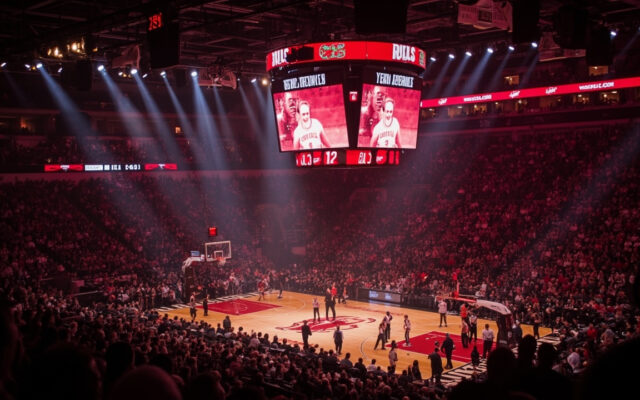
The Bulls play at the United Center, one of the NBA’s most recognizable arenas and a central venue in Chicago sports. The building has been home to countless memorable Bulls moments and remains closely tied to the team’s modern identity. It is a place where the franchise’s history is visible in the atmosphere, the crowd, and the expectations that come with every home game.
Chicago itself gives the Bulls a special place in the league. The city is one of the largest markets in American sports, with a deep basketball culture and a fan base that expects both effort and ambition. The Bulls are not just another NBA team in Chicago; they are a major part of the city’s sports conversation and a symbol of one of basketball’s most storied brands.
That connection between arena and city matters because it helps explain why the Bulls remain such a headline team even in seasons when the standings are uneven. The setting, the market, and the history combine to make Chicago one of the league’s most watched stops. For the Bulls, home games are always about more than the box score.
Last season
In the 2025-26 season, Chicago finished 31-52 in the regular season and did not play in the playoffs based on the data available here. That result reflects a year in which the team did not reach the postseason stage it has often pursued. For a franchise with championship roots and big-market expectations, a season like that naturally invites a reset in both approach and ambition.
Last season also provides context for where the Bulls are now. Records matter, but so does how a team responds to them, especially when the roster is young in some spots and experienced in others. Chicago’s path forward will depend on whether the current group can turn individual talent into a more complete and consistent team performance.
The key takeaway from the season is that the Bulls now enter a new stretch with questions to answer and opportunities to seize. A franchise with this much history is always measured against its best versions, but every new year also offers a chance to move the story forward. The Bulls’ next step will be judged by whether the team can raise its floor and re-enter the playoff picture.
Current roster and coaching staff
The current Chicago roster blends established veterans, productive prime-age players, and a wave of younger talent. That mix gives the Bulls multiple directions to explore, from ballhandling and shot creation to frontcourt size and defensive versatility. Head coach Tiago Splitter will be tasked with organizing those pieces into a coherent rotation and helping the roster settle into its roles.
For a team in transition, roster balance is as important as headline talent. The Bulls have several players who come in with last season’s production already on the page, while the rookie group adds long-term possibility. With Zach Collins listed as day-to-day because of a toe issue following surgery, depth and flexibility matter right away.
- Norman Powell — Guard, #24, age 33; a proven scorer who posted 21.7 points, 3.5 rebounds, and 2.5 assists last season.
- Josh Giddey — Guard, #3, age 23; a central playmaking presence after averaging 17.0 points, 8.3 rebounds, and 9.1 assists.
- Matas Buzelis — Forward, #14, age 21; a young scoring forward with 16.3 points, 5.8 rebounds, and 2.1 assists last season.
- Tre Jones — Guard, #30, age 26; a steady creator who put up 14.1 points, 3.1 rebounds, and 5.4 assists.
- Nic Claxton — Center, #9, age 27; a rim presence and interior contributor with 11.7 points, 6.9 rebounds, and 3.7 assists.
- Brandon Boston Jr. — Guard, #13, age 24; a scoring option who averaged 10.7 points, 3.2 rebounds, and 2.2 assists.
- Jalen Smith — Forward, #25, age 26; a frontcourt piece with 10.2 points, 6.7 rebounds, and 1.2 assists.
- Zach Collins — Forward, #12, age 28; listed day-to-day with a toe injury, after averaging 9.7 points, 5.6 rebounds, and 1.5 assists.
- Isaac Okoro — Forward, #35, age 25; a versatile wing who averaged 9.3 points, 2.7 rebounds, and 1.6 assists.
- Patrick Williams — Forward, #44, age 25; a two-way forward with 7.0 points, 3.0 rebounds, and 1.5 assists.
- Buddy Hield — Guard, age 33; a perimeter scorer and spacing threat who averaged 7.6 points, 2.3 rebounds, and 1.4 assists.
The rest of the group adds depth and developmental intrigue, including Leonard Miller, Orlando Robinson, Drew Peterson, Tobe Awaka, Noa Essengue, Jaylin Sellers, Dailyn Swain, and Caleb Wilson. In a long season, teams often need more than their top names, and Chicago’s roster gives the coaching staff multiple combinations to test. The challenge will be converting that depth into lineups that fit together naturally.
Rivalries
The Bulls’ rivalries are part of what makes the franchise’s history feel so vivid. Some are rooted in geography, while others are built on playoff battles, star power, and repeated postseason meetings. Chicago’s biggest rivalries often reflect the eras when the team was strongest, especially when the Bulls were setting the pace for the league.
The most famous rivalry in Bulls history is with the Detroit Pistons, a matchup that defined the late-1980s East and helped harden Chicago into a champion. The battles with Detroit became a rite of passage for the Bulls and helped shape the team that would eventually rise to the top. Another natural rivalry exists with the New York Knicks, especially because of repeated high-stakes meetings in the 1990s and the contrast between two of the NBA’s classic Eastern Conference brands.
Chicago also shares an energetic connection with the Cleveland Cavaliers, a rivalry that has often been intensified by playoff stakes and star-driven competition. Within the conference, the Bulls have frequently found themselves in games that carry more history than an ordinary regular-season matchup. That is one reason the franchise remains relevant even during uneven seasons: every game can feel like part of a larger story.
What to watch this season
This season will be about more than wins and losses. For the Bulls, it is a chance to see how a newly shaped roster functions under Tiago Splitter and whether the team can find a clearer identity. The biggest questions center on how the guards drive the offense, how the frontcourt holds together, and which combinations prove best over time.
Josh Giddey’s playmaking, Norman Powell’s scoring, and Matas Buzelis’s growth stand out as major storylines, while Nic Claxton and Jalen Smith give the Bulls important size and interior options. Tre Jones, Brandon Boston Jr., and Isaac Okoro add more ways to balance the backcourt and wings. If the roster can stay organized and healthy, there is enough versatility to make the team interesting on both ends of the floor.
- Can the offense find a stable engine? With several creators on the roster, Chicago will need a clear hierarchy and efficient shot generation.
- Which young players take a real step forward? Buzelis, Williams, and the rookie class could shape the team’s longer-term direction.
- How quickly does the new coaching staff settle the rotation? Tiago Splitter’s decisions will matter from the start of preseason through the regular season.
- Can the Bulls turn depth into consistency? The roster has many pieces, but the season will reward teams that define roles early.
The preseason schedule offers an early look at how those pieces may come together, with games against the Phoenix Suns on October 7, the Memphis Grizzlies on October 9, and the Denver Nuggets on October 11. Those matchups should provide useful early indicators about pace, lineup structure, and the team’s comfort level in new combinations. For a club with the Bulls’ heritage, the next chapter always begins with the same mix of pressure and possibility.